
15 Frontier AI Models Worth Watching in 2026 – Ranked and Benchmarked via AICC’s Unified API
SINGAPORE, SINGAPORE, SINGAPORE, August 19, 2026 /EINPresswire.com/ -- The Pace of AI in 2026 The pace of AI model
Press Release Disclaimer: This is a press release distributed through the XPR Media network. It has not been independently verified by our newsroom.

SINGAPORE, SINGAPORE, SINGAPORE, August 19, 2026 /EINPresswire.com/ — The Pace of AI in 2026
The pace of AI model releases in 2026 has turned into something closer to a factory line than a research race. In the space of a single week in August, xAI shipped Grok 4.6, DeepSeek launched V4-Pro and its open-source agent harness, Meta released Muse Glimmer, and Google pushed out Gemini 3.7 Flash. For developers, the problem is no longer finding a capable model – it is choosing between them without getting locked into one vendor’s ecosystem.
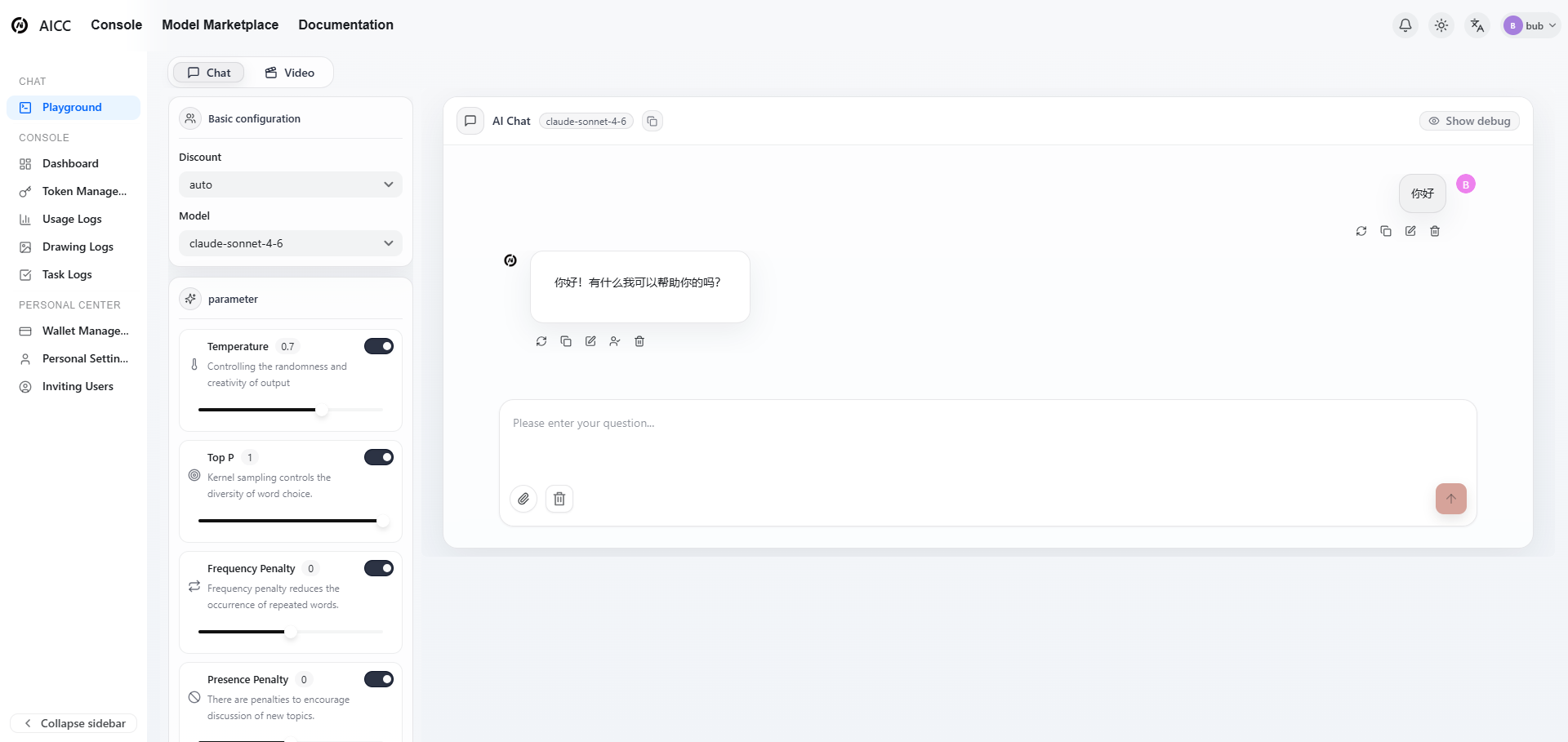
This article ranks the 15 frontier models that matter most in 2026, based on benchmark data across reasoning, coding, agentic work, and cost-per-task efficiency. Because the field moves fast and model APIs change pricing almost weekly, every figure below was cross-checked against live performance captured through a unified AI API (https://www.ai.cc/) that routes a single request to hundreds of model providers, making genuine side-by-side comparison possible for the first time.
Methodology: How These 15 Models Were Ranked
Ranking frontier models fairly requires a consistent testing environment. Our benchmark runs used the Artificial Analysis Intelligence Index (a composite of nine evaluations) as the primary intelligence signal, then layered in task-level scores – Terminal-Bench for agentic coding, DeepSWE for repository-level engineering, GDPval for knowledge work, and AA-Briefcase for long-horizon tasks. Where independent evaluations exist, we prefer them to vendor-run tables, which we flag explicitly.
For 2026, four factors decided the final ranking:
• 1. Raw intelligence- composite index scores that hold up under third-party verification.
• 2. Agentic capability- how well a model sustains multi-step tool use without drifting.
• 3. Cost-per-task- headline token pricing is misleading; what matters is the total bill to finish a real job.
• 4. Access model- open weights, API availability, and hardware requirements.
Every model below can be tested today without a dedicated contract through a single dashboard, and the ranking reflects that reality: in 2026, the winner is usually the model that delivers frontier results at a price a team can actually sustain.
The 2026 Frontier Model Ranking at a Glance
Tier 1 – The Frontier Leaders
1. Claude Opus 5 (Anthropic)
Claude Opus 5 holds the top composite score on the Artificial Analysis Intelligence Index at 63, and it takes the #1 spot on GDPval-AA v2 with an Elo of roughly 1,852 – the highest measured score for real-world agentic knowledge work in 2026. Its strength is not a single benchmark but consistency across rubric-graded long tasks, where it leads every tier below it. The trade-off is cost: at $5 per million input and $25 per million output tokens, it is among the most expensive models in production, making it a choice for high-value enterprise work rather than high-volume pipelines.
2. Claude Fable 5 (Anthropic)
Fable 5, Anthropic’s frontier model with fallback routing, posts a 62 composite score and holds standout DeepSWE results around 70, with vendor-verified terminal performance at 88.0 on Terminal-Bench 2.1. It is the reference point nearly every 2026 launch table compares against – Grok 4.6 markets itself as within 0.1 of Fable 5 on terminal tasks, and DeepSeek positions V4-Pro against it. For teams that need the strongest agentic coding without managing Opus-level costs, Fable 5 remains the default benchmark to beat.
3. GPT-5.6 Sol (OpenAI)
GPT-5.6 Sol matches Grok 4.6 at 61 on the composite index but distinguishes itself in law, finance, and engineering documents, where OpenAI claims it is the strongest model in its portfolio. The August release of an Ultrafast mode – powered by Cerebras hardware and reaching roughly 14x standard throughput at up to 750 output tokens per second – made it the highest-throughput frontier model in production. The headline price of $5/$30 is steep, but for teams whose economics are dominated by output tokens on reasoning-heavy work, the speed tier can change the math entirely.
4. Grok 4.6 (xAI)
Grok 4.6 is the value story of 2026. It matches GPT-5.6 Sol’s 61 composite score at $2 input / $6 output – the same price as Grok 4.5 – while adding a new xhigh reasoning level and a 500,000-token context window. Artificial Analysis measured it completing long agentic tasks in roughly 53 turns and 0.5 billion input tokens, versus about 103 turns and 2.0 billion tokens for Claude Opus 5, making it roughly four times cheaper per finished job on long-horizon work. Grok 4.6 is available through the xAI API and via the AICC Grok model hub (https://www.ai.cc/xai/), which aggregates it alongside competing providers for direct comparison.
5. Kimi K3 (Moonshot)
Kimi K3 is the world’s first open 3T-class model: 2.8 trillion total parameters, 104 billion activated per token, with native vision and a 1-million-token context window. Its weights shipped on Hugging Face (594 GB, MXFP4) just 11 days after launch – a credibility move that Qwen3.8 Max had not matched as of early August. At a composite score of 57 it trails the closed frontier but beats every other open-weight model on the board, and at $3/$15 with a $0.30 cache-hit rate it undercuts Western frontier pricing by a wide margin.
6. Qwen3.8 Max (Alibaba)
Qwen3.8 Max is Alibaba’s 2.4-trillion-parameter MoE flagship, activating 95 billion parameters per token with a 1-million-token context. It posts a composite of 56 and jumps 468 Elo points on GDPval to 1,739, catching Claude Opus 4.8. The catch is efficiency – it needs about 64 steps per task where Kimi K3 needs 14, inflating real cost per task to roughly $1.14. For multimodal and long-document workloads, however, it is arguably the strongest open-weight option available.
Tier 2 – Open-Weight and Execution Models
7. DeepSeek V4-Pro (DeepSeek)
DeepSeek V4-Pro, launched August 13, is the flagship of the post-training-first era: no architecture change, all gains from scaling agentic reinforcement learning. Terminal-Bench 2.1 jumped from 72.1 to 87.9, and DeepSWE from 12.8 to 62.7. It pairs with the open-source DeepSeek Harness (MIT license) – an agent framework where every component, from model adapter to tool registry to session log, is a swappable plugin. Its August peak/off-peak pricing model made it the first major API to charge different rates by time of day.
8. Gemini 3.7 Flash (Google)
Gemini 3.7 Flash is Google’s answer to the low-cost inference race: a 2026 promotional price of $0.75 per million input tokens and $3.75 output – half the rate of its predecessor. Google’s cadence of three Flash iterations in roughly three months signals a deliberate strategy to win the high-volume developer market, trading raw headline intelligence for throughput and price. For teams burning millions of tokens daily on classification, extraction, or routing, it is the volume leader.
9. GLM-5.3 (Zhipu)
GLM-5.3 is the most capable open-weight coding model of 2026, delivering a roughly 50% coding improvement over GLM-5.2 through post-training alone. It claims open-source state-of-the-art on Terminal-Bench 3.0 (28.3) and Agents’ Last Exam, and it surprised observers by developing emergent cyber capabilities – scoring best-in-class 84.5 on CyberGym while doubling its predecessor on exploitation benchmarks. Weights are promised two weeks after launch, pending safety hardening.
10. Muse Spark 1.2 (Meta)
Muse Spark 1.2 is Meta’s closed flagship from its new Superintelligence Labs. It has been deliberately positioned away from the agentic-coder crowd and toward multimodal product work, with strong visual-generation and instruction-following results. The interesting strategic note is that Meta pairs it with an aggressive open line – one that competes with its own closed product.
11. Muse Glimmer (Meta)
Muse Glimmer is Meta’s first major open release since Llama 4 – a 30-billion-parameter model under a permissive Apache 2.0 license, quantized to run on a single 24 GB or 32 GB consumer GPU. It is optimized for always-on local agents: tool use, long tasks, and failure recovery, with speculative decoding (DFlash) for speed. It scored 35 on the AA Intelligence Index but its real value is sovereignty – running private agentic workflows entirely on-device.
12. Nemotron 3.5 Lightning (NVIDIA)
NVIDIA’s Nemotron 3.5 Lightning is a 30B-parameter MoE with only 3 billion active parameters, designed as the execution layer for always-on agents: the model that handles the routine calls – git pulls, output validation, formatting – that dominate an agent’s token budget. With speculative decoding it delivers up to 4x output speed over similar-sized models, and it wins the accuracy-versus-speed Pareto frontier for its class. NVIDIA pairs it with NeMo Switchyard for routing, but any multi-model gateway (https://www.ai.cc/models/) can play the same role in production.
Tier 3 – Multimodal and Video Frontier
13. GPT-5.5 Luna (OpenAI)
GPT-5.5 Luna is OpenAI’s cost-tier model, sitting below Sol for high-volume reasoning tasks. It is the model OpenAI’s own Codex agent uses for delegation when a task does not warrant frontier compute – a preview of the multi-agent routing pattern that will define 2027. Its importance in this ranking is architectural: it proves the frontier model becomes an internal resource that cheaper models consult.
14. LTX-2.5 (LTX)
LTX-2.5 is the open-weights world model that collapses video production onto a single desk. On an NVIDIA GB200 it generates a 10-second 720p clip in about 6.8 seconds – faster than the clip plays – at roughly one-eighth the generation cost of closed rivals. It is free for organizations under $10 million in annual revenue, ships natively in ComfyUI, and has amassed more than 33 million downloads across the LTX family. This is the model most likely to reset video production economics in 2026.
15. Seedance 2.5 (ByteDance)
Seedance 2.5 is ByteDance’s cinematic text-to-video model, connected to a full creative workflow – reference materials, duration extension, shot control, and audio. It sits behind the API tier of this list because video-generation quality remains harder to benchmark than text, but its role in turning generative video into a finished production pipeline marks the direction every competitor is now chasing.
What This Ranking Tells Us About 2026
Three structural shifts stand out in this year’s frontier:
First, agentic capability now outweighs raw intelligence.The models that moved markets in August – Grok 4.6, DeepSeek V4-Pro, GLM-5.3 – were post-training upgrades focused on long-horizon tool use, not bigger bases. When DeepSeek improved DeepSWE from 12.8 to 62.7 without touching the architecture, it demonstrated that the execution environment now shapes model value as much as the weights do.
Second, cost-per-task is the new battlefield.Token pricing wars dominate the headlines, but the efficient frontier is defined by turns and input-token consumption. Grok 4.6 finishing in half the turns of Opus 5 is worth more than a 20% per-token discount. Measuring models on finished-job cost – the only apples-to-apples signal – requires running them against the same workload through the same gateway.
Third, the winner is the ecosystem, not the model.Open-weight releases (Kimi K3, Qwen3.8 Max, Muse Glimmer, Nemotron Lightning) and model-agnostic harnesses (DeepSeek Harness) are eroding lock-in at both the model and the tooling layer. That is why routing infrastructure – the layer that lets a Grok handle planning while a Lightning handles execution – has become the most strategically important part of the AI stack.
How to Evaluate These Models Yourself
Vendor launch tables are marketing; the only durable comparisons are the ones you run. For teams that want to verify this ranking before committing, the fastest path is to benchmark the candidates against your own repository using the same workload, same harness, and same token budget across providers. Platform dashboards that offer hundreds of models behind one API – such as AICC’s model library (https://www.ai.cc/models/) – make this practical: you can A/B test Grok 4.6 against Claude Fable 5 against Kimi K3 on your own codebase in an afternoon, using a single key and a single billing statement.
If the models in this ranking are being evaluated for a production deployment, three practical steps apply:
• 1. Re-run the agentic benchmarks- DeepSWE and Terminal-Bench results from August will be stale within weeks; score them on your own task set.
• 2. Model your token mix- a model that is 40% cheaper per token but 2.5x more expensive per finished job is the wrong choice for agent loops.
• 3. Plan for routing- the 2027 pattern is a system of models, not one model; architecture for a gateway early.
Frequently Asked Questions
What is the most intelligent AI model of 2026?
Claude Opus 5 holds the top Artificial Analysis Intelligence Index score at 63, followed by Claude Fable 5 at 62, with GPT-5.6 Sol and Grok 4.6 tied at 61. On real-world knowledge-work benchmarks like GDPval-AA, Opus 5 also leads.
Which AI model offers the best value in 2026?
Grok 4.6 delivers frontier-level intelligence (61 composite) at $2/$6 per million tokens and completes long agentic tasks in roughly half the turns of Claude Opus 5, making it the strongest cost-per-task value. On the open-weight side, Kimi K3 and Qwen3.8 Max undercut Western frontier pricing significantly.
What is the best open-source AI model of 2026?
For coding, GLM-5.3 claims open-source state-of-the-art on Terminal-Bench 3.0. For general frontier intelligence, Kimi K3 (57 composite, 2.8T parameters) is the strongest open-weight model. For local deployment, Meta’s Muse Glimmer (30B, Apache 2.0) runs on a single consumer GPU.
What is AICC’s Unified API?
AICC is a platform that aggregates 300+ AI models behind one OpenAI-compatible API, providing unified billing, key management, and model switching. It lets developers and enterprises compare, route, and scale across providers without managing multiple vendor contracts.
Conclusion
The 2026 frontier is no longer a single leaderboard – it is a layered system where frontier models plan, execution models run, and open-weight models provide the sovereignty layer. Claude Opus 5 leads on raw intelligence, Grok 4.6 on cost-per-task, Kimi K3 on open frontier, GLM-5.3 on open coding, and LTX-2.5 on video economics. None of them can be evaluated responsibly from a launch blog post.
The teams that win the next year will be the ones that build comparison and routing into their workflow from day one. With a single unified AI API (https://www.ai.cc/), testing all fifteen of these models against your own workloads is a configuration change, not a procurement project. The frontier is wide open – and in 2026, it is also more accessible than it has ever been.
This analysis was compiled using live model data aggregated through AICC’s unified API platform as of mid-August 2026. Benchmark figures are sourced from Artificial Analysis and independent leaderboards where available; vendor-run figures are noted in context.
AICC
AICC
+44 7716 940759
support@ai.cc
Legal Disclaimer:
EIN Presswire provides this news content “as is” without warranty of any kind. We do not accept any responsibility or liability
for the accuracy, content, images, videos, licenses, completeness, legality, or reliability of the information contained in this
article. If you have any complaints or copyright issues related to this article, kindly contact the author above.

Media gallery


